


Poly B Plumbing Insurance in Calgary: Dangers & Steps
Whether you just found out your home has Poly B or your insurance broker just sent a notice of non-renewal, you’re not alone.
For Calgary homeowners in 2026, Poly B plumbing has become the single biggest threat to their home, their insurance, and their peace of mind. Tens of thousands of homes across the city still rely on Poly B pipes that insurers now classify as a known risk, and the window for affordable, stress-free replacement is narrowing every year.
The good news? Replacing Poly B to move from “uninsurable” to “fully protected” is a straightforward process once you understand the risks, timeline, and steps involved.
Table Of Contents:
- What Is Poly B, and Why Is Your Insurer Worried?
- The “Insurance Ultimatum” in Alberta
- Buying or Selling a Home with Poly B?
- PEX vs. Poly B
- Cost-Benefit Analysis
- Conclusion & Next Steps
What Is Poly B, and Why Is Your Insurer Worried?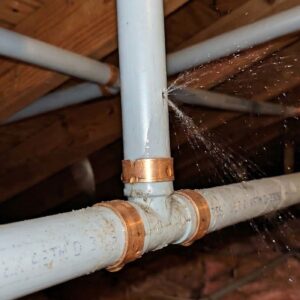
Poly B (polybutylene) plumbing consists of grey plastic pipes, commonly installed in Calgary homes from the mid-1980s to the mid-1990s.
If your home was built during that era, check exposed pipes in your basement, utility room, or under sinks. You can identify them by their distinctive grey colour, the stamped markings “PB2110” or “CSA-B 137.8”, and the copper or plastic (acetal) fittings connecting each section.
According to unconfirmed estimates from the Government of Alberta, approximately 148,000 homes in the province still have Poly B plumbing, with a total of roughly 700,000 homes across Canada. That is a lot of properties sitting on the same ticking clock.
So, why are insurers so alarmed? It is not just how Poly B fails or what the damage costs. It is that failure is practically guaranteed, and your system gets closer to that point with every passing year.
Polybutylene is susceptible to oxidation from disinfectants such as chlorine in municipal water supplies. Over time, this ongoing chemical reaction weakens the pipe from the inside out, creating microfractures that are invisible until the pipe suddenly fails.
Unlike gradual plumbing issues, Poly B failures are often abrupt and unpredictable. When they rupture without warning, they can release a large volume of water in a short period, resulting in significant water damage (especially in finished basements or behind walls). This is where the real risk lies for insurers.
In Calgary, additional factors, such as temperature fluctuations and the age of existing systems, further increase the likelihood of failure. Most Poly B systems in the city are now 25 to 40 years old, which is well beyond the 15-to-25-year window when problems typically begin.
The “Insurance Ultimatum” in Alberta
Insurance companies have moved beyond simply flagging Poly B. Many Alberta insurers now explicitly exclude water damage caused by polybutylene pipe failure from their policies. If your Poly B springs a leak and the exclusion is in your policy, you will pay the full cost of the damage out of pocket.
For homeowners who can still get coverage, the terms are often punishing. According to Westland Insurance, some insurance companies add surcharges, reduce payout caps, or require proof of a plumbing inspection before they will renew the policy at all.
The specifics vary by provider, but the direction is the same: insurers are making it more expensive and more difficult to keep a home with Poly B on the books.
New home buyers face an even steeper challenge. Several Alberta insurance providers now deny coverage entirely until the Poly B is fully replaced. Without active home insurance, mortgage lenders will not finalize the loan, which means a Poly B system can stop a home purchase in its tracks.
Buying or Selling a Home with Poly B?
If you are buying a home with Poly B in Calgary, it is critical to address the issue before removing conditions on your purchase. Insurance approval is often required for mortgage financing, and delays or denials can put your deal at risk.
In some cases, Poly B plumbing may also be considered a material latent defect, depending on how it is disclosed and understood during the transaction.
Before moving forward, buyers should:
- Confirm the pipe material during inspection
- Speak with an insurance broker before firming up the purchase
- Obtain a replacement quote to understand costs upfront
For sellers, replacing Poly B before listing often removes a major objection and simplifies negotiations. Most lenders and insurers will not accept a price credit in place of completed work.
PEX vs. Poly B
When it is time to replace Poly B, the industry standard is PEX (cross-linked polyethylene). When you compare Poly B vs PEX piping, the differences are significant: PEX resists chlorine degradation, handles Calgary’s hard water and freeze-thaw cycles with ease, and is widely accepted by insurance providers.
At Son-Rise Plumbing & Gasfitting, we use minimally invasive techniques to replace Poly B with as little disruption to your drywall as possible. Our licensed plumbers plan strategic access points, so you are not left with patching and finishing work throughout your entire house.
Equally important is documentation. Once the job is complete, we provide the paperwork that your insurance broker needs to confirm that the Poly B has been fully replaced with PEX.
This documentation is what allows your insurer to lower your premiums, remove exclusions, and restore full coverage.
Cost-Benefit Analysis: Replacement vs. Disaster
When comparing the cost of proactive replacement versus the potential cost of a water damage event, the difference is significant.
| Feature | Poly B Replacement | Water Damage Event |
| Typical Cost ($, $$, $$$) | $$ | $$$ |
| Insurance Impact | Full coverage restored | Claim denied or limited |
| Home Value | Increased resale value | Decreased buyer interest |
| Timeline | Planned, on your schedule | Unplanned emergency |
Beyond the dollar figures, there is significant peace of mind in knowing your pipes will not fail while you are at work, on vacation, or asleep.
Poly B failures are not a matter of “if” but “when,” and the cost of waiting almost always exceeds the cost of acting now.
Conclusion & Next Steps
Insurance companies aren’t becoming more lenient with Poly B; they’re becoming more strict. Every year, more Alberta insurers tighten their policies, raise their deductibles, or drop Poly B homeowners entirely.
The most cost-effective time to replace your Poly B is before you have a leak, a denied claim, or a cancelled policy.
Don’t wait for a leak or a cancelled policy. Contact Son-Rise Plumbing today for a professional Poly B replacement quote in Calgary.