


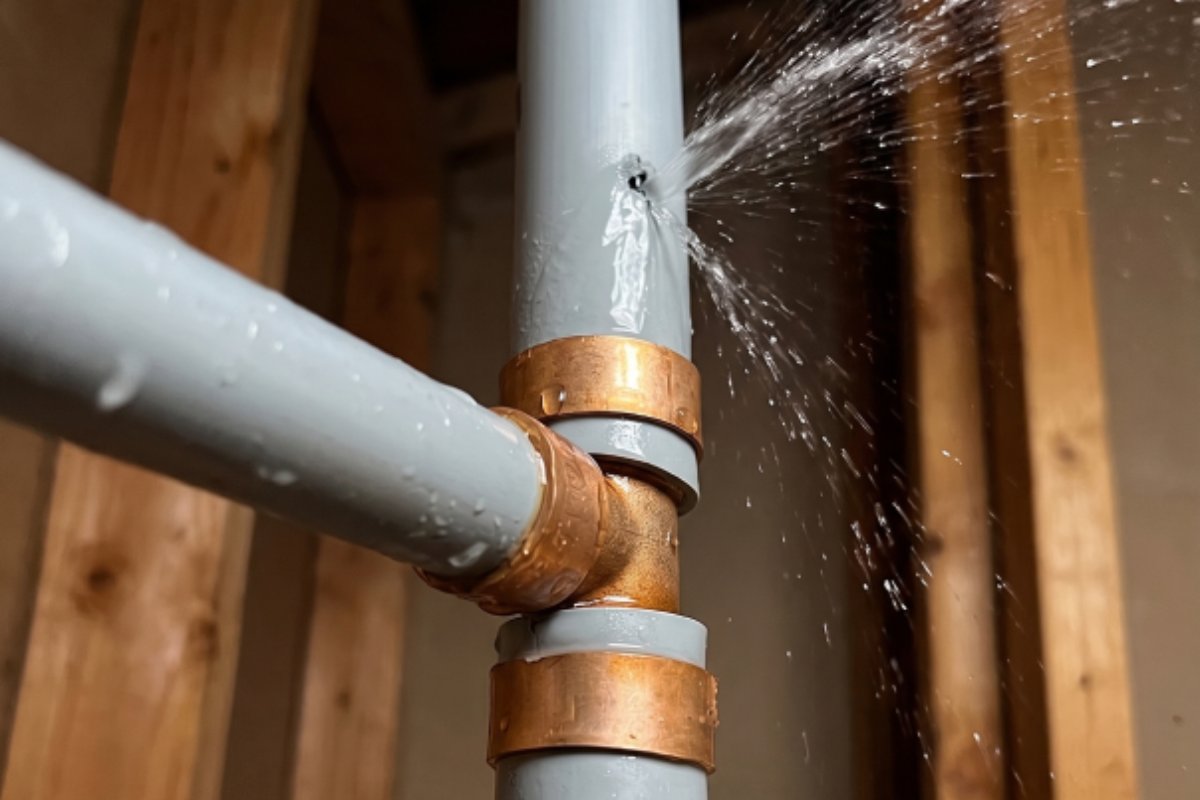
What Is Poly B Plumbing: Is It Bad & How To Identify It
Buying a home with Poly B plumbing, or learning that your current home has it, can quickly raise a lot of questions:
- Will the pipes leak?
- Does it affect my insurance?
- What does it do to the resale value if I want to sell?
While Poly B is not considered a drinking-water hazard, it can pose problems for homeowners due to its age, failure risk, insurance complications, and potential impact on home sales.
This guide explains what Poly B is, how to spot it in your home, why it has fallen out of favour with insurers and inspectors, and your replacement options.
If you already know your home has Poly B and want a quote to replace it, you can book a Poly B replacement assessment with Son-Rise Plumbing.
Table Of Contents:
- What Exactly Is Poly B Plumbing?
- How To Identify Poly B Plumbing In Your Home
- Is Poly B Plumbing Bad? Common Issues
- How Much Does A Poly B Replacement Cost?
- What Are Some Alternatives To Poly B Plumbing?
What Exactly Is Poly B Plumbing?
Poly B is short for polybutylene, the material used in flexible grey plastic pipes that were once used for residential water supply lines. Builders liked Poly B because it was lightweight, affordable, and faster to install than copper.
For years, it was commonly used in homes across Western Canada. However, Poly B is no longer approved for new residential plumbing installations under current Canadian plumbing code requirements, according to the Government of Alberta safety bulletin on polybutylene piping.
That does not mean every existing Poly B system must be removed automatically. However, many insurers, inspectors, real estate professionals, and buyers now view Poly B as a risk factor rather than a neutral plumbing material.
When Was Poly B Piping Used In Alberta?
According to the City of Calgary, Poly B was installed in homes between 1978 and 1995. Unconfirmed estimates suggest as many as 148,000 Alberta homes were plumbed with Poly B during this period.
Calgary’s housing boom through the 1980s and early 1990s aligned almost perfectly with Poly B’s peak popularity, which is why so many older homes in Calgary and surrounding areas still have it running through the walls.
If your home was built or substantially repiped during that window, it’s worth confirming what pipe material is in your home.
How To Identify Poly B Plumbing In Your Home
You don’t need to open up your walls to do a basic check for Poly B.
Start by looking at exposed plumbing in your utility room, basement, mechanical room, under sinks, or near the hot water tank.
Common signs of Poly B include:
- Light grey pipe: Poly B is usually grey, although it can sometimes appear black, blue, or off-white.
- Flexible plastic material: It feels more like a flexible hose than rigid copper lines or PVC.
- Stamped markings: Look for markings such as “PB” or “PB2110” printed along the pipe.
- Crimped fittings: Many home plumbing systems use copper crimp rings or older grey plastic fittings.
- Water supply lines: Poly B was used for pressurized water lines, not drains.
If you can see a grey plastic pipe with crimped rings at the joints, there’s a good chance it’s Poly B.
A licensed plumber or qualified home inspector can confirm the material and check whether the visible fittings show signs of wear, leaks, cracking, or corrosion.
Is Poly B Plumbing Bad? Common Issues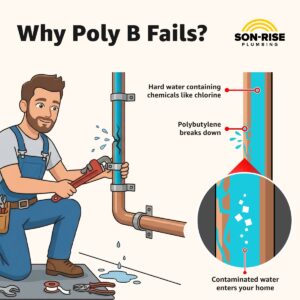
Poly B is not usually considered unsafe because of the water it carries. The greater concern is that aging Poly B is more likely to leak and fail, especially at fittings, joints, and high-stress areas.
Two factors are often linked to Poly B’s poor track record:
Chlorine degrades the pipe material itself. Municipal water in Calgary contains free chlorine as a disinfectant. Over years of contact, chlorine reacts with the polybutylene resin, deteriorating it from the inside while the outside looks normal.
Hard water adds scale buildup. Calgary water is considered “hard to very-hard”, according to the Government of Canada water quality classifications. This means dissolved calcium and magnesium accumulate inside pipes over time.
Scale does not degrade Poly B chemically the way chlorine can, but mineral buildup may contribute to restricted flow and added stress on an aging plumbing system.
Together, these conditions shorten Poly B’s usable life well below that of modern materials. Real-world failures often start at fittings and joints, where the first sign is usually a leak inside a wall or ceiling rather than a drip you can see and stop early.
The downstream effects matter too. Many home insurance providers in Alberta now restrict coverage on properties with Poly B, and some decline new policies outright. We’ve covered the implications in detail in our guide to Poly B plumbing and home insurance.
How Much Does A Poly B Replacement Cost?
Replacement costs vary widely because every home is different. Square footage, the number of fixtures, the accessibility of the existing pipe runs, and the chosen replacement material all factor in.
As a broad industry ballpark, replacing Poly B in a typical Calgary-area home may cost anywhere from several thousand dollars to $15,000+, depending on the scope of work. Larger homes, finished basements, difficult pipe runs, and extensive drywall access can increase costs.
The most reliable way to know what your home will cost is to get an on-site assessment from a licensed plumber who can see your specific layout. It’s also worth weighing the cost against the average Canadian water-damage claim, which routinely runs into the tens of thousands of dollars.
What Are Some Alternatives To Poly B Plumbing?
Two materials dominate residential repiping in Calgary today, and both outperform Poly B under local water conditions.
PEX
PEX (cross-linked polyethylene) is the most common replacement choice. It resists chlorine degradation, handles temperature swings well, and offers enough flexibility to absorb minor freeze-thaw stress without cracks, which matters in Calgary’s climate.
Properly installed PEX is rated for 40+ years of service, and most home insurers treat it on par with copper. For a closer look at how PEX stacks up against Poly B, read our article: Poly B vs. PEX.
Copper
Copper has been the standard for residential plumbing for decades and remains a strong choice. It’s naturally antimicrobial, holds up well over a 50+ year lifespan, and is widely accepted by insurers.
The trade-offs are higher material and labour costs, reduced flexibility due to tight spaces, and lower freeze-resistance than PEX.
For most Calgary homes, replacing Poly B with PEX is the practical winner in terms of cost and performance. Copper still has its place among homeowners who prioritize maximum longevity and don’t mind the price difference.
Replace Your Poly B Plumbing With Son-Rise

Poly B is a known plumbing issue with a known solution. While every home is different, waiting can become expensive if a pipe fails behind a wall, ceiling, or finished basement.
Son-Rise Plumbing & Gasfitting has served Calgary homeowners since 1983. Our licensed plumbers can inspect your home, confirm whether you have Poly B, explain your replacement options, and provide upfront pricing.
We aim to complete Poly B replacement with as little disruption as possible, while helping you protect your home from future leaks, insurance complications, and resale concerns.
Ready to find out where you stand? Contact us to book a Poly B assessment.