Poly B vs. PEX: The Best Piping for Your Calgary Home
If you already know your home has Poly B plumbing, you’ve probably wondered how much time it really has left, and how much of a risk you’re taking by leaving it as-is.
After all, is Poly B replacement really necessary if nothing has leaked, or is upgrading to PEX plumbing just the latest home renovation fad?
In Calgary, the urgency is real because of what’s in our water. The City of Calgary reports free chlorine residual levels between 0.82 and 2.01 mg/L and hardness ranging from 141 to 274 mg/L, placing it in the “hard-to-very hard” range according to the Government of Canada’s drinking water quality classifications.
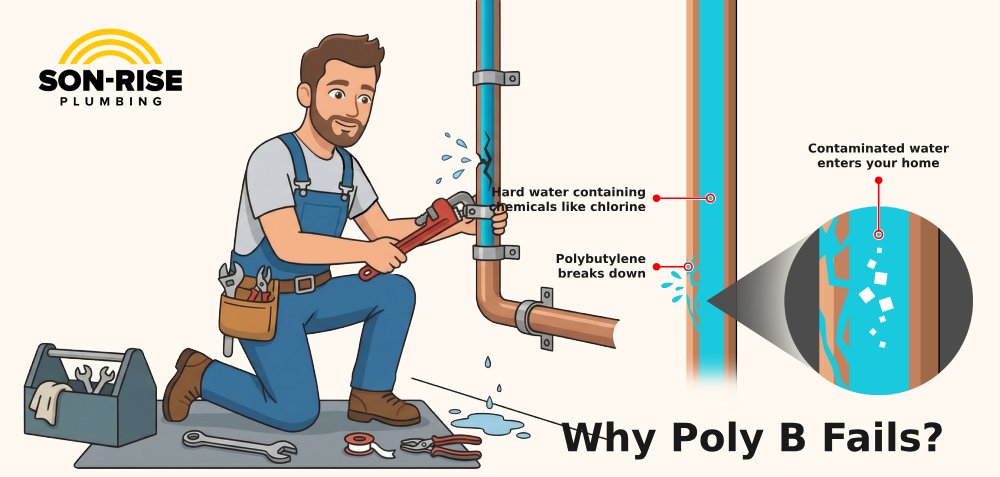
Chlorine chemically degrades polybutylene, making it brittle over time. Meanwhile, hard water contributes to mineral scale build-up inside the pipes. This combination can lead to failure without any visible warning signs. That’s why the Poly B vs PEX discussion is ultimately about long-term performance under local conditions.
Our Poly B Replacement experts have written this guide to break down the two piping materials in terms of durability, cost, insurance considerations, and resale value so you can make a well-informed decision before problems arise.
Table Of Contents:
- What Is Poly B?
- What Is PEX?
- Poly B or PEX: The Head-to-Head Comparison
- Do I Really Need to Replace Poly B?
- The Son-Rise Advantage
- Invest in Peace of Mind
What Is Poly B?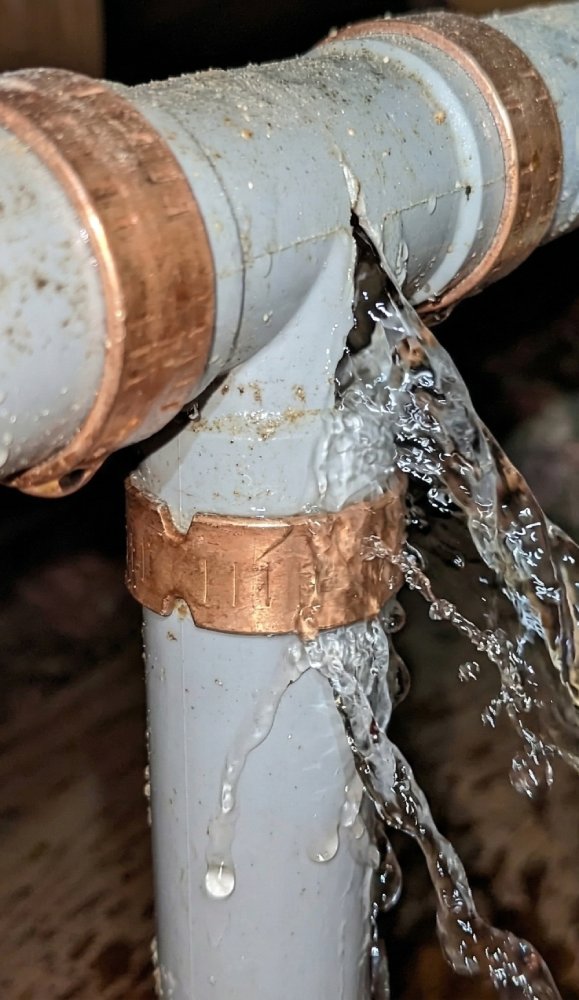
Polybutylene plumbing, commonly called “Poly B”, is a grey plastic pipe that was installed in hundreds of thousands of Canadian homes between 1978 and 1995. Builders favoured it because it was cheap, lightweight, and faster to install than copper piping.
According to the Government of Alberta, unconfirmed estimates claim that approximately 148,000 homes in the province were plumbed with Poly B during that era.
So, why did it fall out of favour? Two fundamental weaknesses emerged over time.
First, Poly B is chemically sensitive to chlorine. Municipal water treatment across Canada uses chlorine as a disinfectant, which is necessary for public health but devastating for polybutylene resin. Chlorine reacts with the inner surface of the pipe, gradually weakening the plastic and making it brittle.
Second, many Poly B systems were installed with plastic (acetal) fittings that become brittle and crack with age. Metal fittings, while more durable, can corrode and create their own set of slow-leak problems.
The “Slow Leak” Myth
What catches most homeowners off guard is that Poly B typically fails from the inside out.
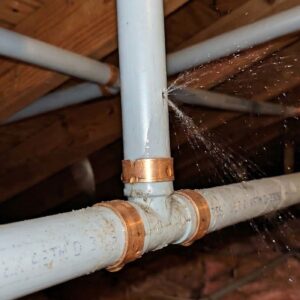
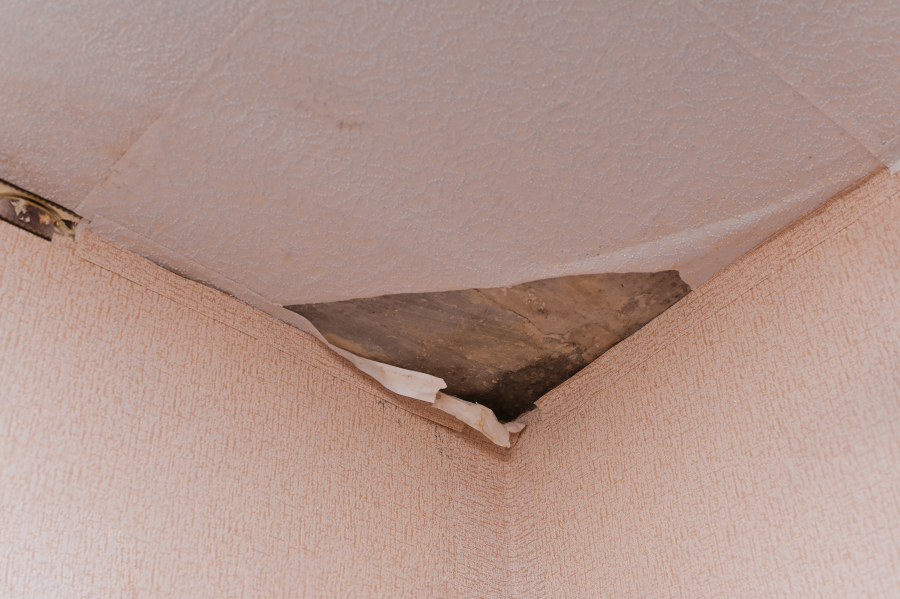
The pipe’s outer surface can appear perfectly fine while microfractures develop internally. By the time you notice a ceiling stain or a drop in water pressure, the damage has often been building for months or even years.
This hidden deterioration is what turns a minor plumbing issue into major water damage, often without warning.
What Is PEX?
PEX stands for cross-linked polyethylene. Unlike standard plastic piping, PEX undergoes a chemical cross-linking process during manufacturing that bonds its molecules into a much stronger, more resilient structure.
The result is a pipe that is flexible enough to route through tight spaces yet engineered to resist the exact conditions that destroy Poly B.
Why PEX Wins in Calgary
PEX resists chlorine degradation, meaning Calgary’s treated water won’t eat away at it the way it does with Poly B. It also handles mineral scale buildup far better, an important advantage given our hard water levels.
Perhaps most critically for Alberta homeowners, PEX performs exceptionally well in freeze-thaw cycles. The piping material can expand slightly if water inside freezes, dramatically reducing the risk of burst pipes during those sudden Chinook-to-deep-freeze temperature swings Calgary is known for.
Lifespan
PEX piping is expected to last 40 to 50 years or more when properly installed, with manufacturers typically offering 25-year warranties.
Compared to Poly B’s real-world lifespan of roughly 15 to 25 years, most Calgary homes with Poly B systems are already well past that window.
Poly B or PEX: The Head-to-Head Comparison
When you compare Poly B to PEX side-by-side, the differences are clear.
| Feature | Poly B (The Past) | PEX (The Future) |
| Durability | Degrades with chlorine | Resistant to chlorine & scale |
| Insurance | Often restricted | Fully accepted |
| Resale Value | Buyer red flag | Value booster |
| Flexibility | Requires fittings | Bends with fewer joints |
Do I Really Need to Replace Poly B?
Not every Poly B plumbing system has failed, but every one will eventually. Here are three ways to assess your risk:
1. Check The Age
If your home was built between the mid-1980s and late 1990s, your Poly B plumbing system is likely already at (or well beyond) its expected lifespan.
Most systems begin to fail around the 20–25 year mark, meaning many Calgary homes are now operating on borrowed time, even if no issues are visible.
2. Check The Fittings
Look at the exposed pipes in your utility room or basement. If you see grey plastic fittings (acetal), your home’s plumbing system has the highest risk of failure. Homes with brass or copper fittings tend to fare better, but the pipe material itself is still degrading.
3. The Home Sale Test
If you’re planning to sell within the next 3 years, know that Calgary buyers and their home inspectors will almost certainly flag Poly B.
Many buyers will request a replacement before closing, or negotiate a significant price reduction. Replacing proactively puts you in a stronger negotiating position.
With the average water damage claim estimated between $25,000 and $45,000 (not counting the disruption to your household and the potential for denied insurance claims on a known Poly B system), the value of repiping your home is significant.
The Son-Rise Advantage
Replacing Poly B is a significant upgrade, and who replaces it matters just as much as what you replace it with.
At Son-Rise Plumbing & Gasfitting, we’ve been replacing Poly B in Calgary homes for decades, and we’ve fine-tuned our process to minimize disruption to your home and your life.
Minimally Invasive Techniques
We don’t tear down every wall in your house to get the job done.
Our experienced team uses strategic access points and careful planning to replace your piping with as little disruption to drywall as possible. This often means less patching and finishing work afterward.
The PEX-A vs. PEX-B Difference
Not all PEX is created equal.
PEX-A (manufactured using the Engel method) has a higher degree of cross-linking than PEX-B, which gives it superior flexibility, better freeze resistance, and the ability to use expansion fittings that maintain full water flow through every connection.
PEX-A is our preferred material because it delivers maximum reliability for Calgary’s demanding conditions.
Local Expertise
Serving Calgary since 1983, our Calgary-based team understands the plumbing layouts of 1980s and 1990s homes, the local water conditions, and current-day building code requirements in ways that a national franchise simply can’t match.
Invest in Peace of Mind
When you compare Poly B vs PEX, the verdict is clear: PEX isn’t just another plastic pipe. It’s a long-term investment in your home’s safety, value, and insurability.
Every year you wait, your aging Poly B plumbing system moves closer to failure in a city whose water chemistry is actively working against it.
Stop guessing about your pipes. Get a free, transparent quote for a Poly B to PEX upgrade from Son-Rise Plumbing today.