


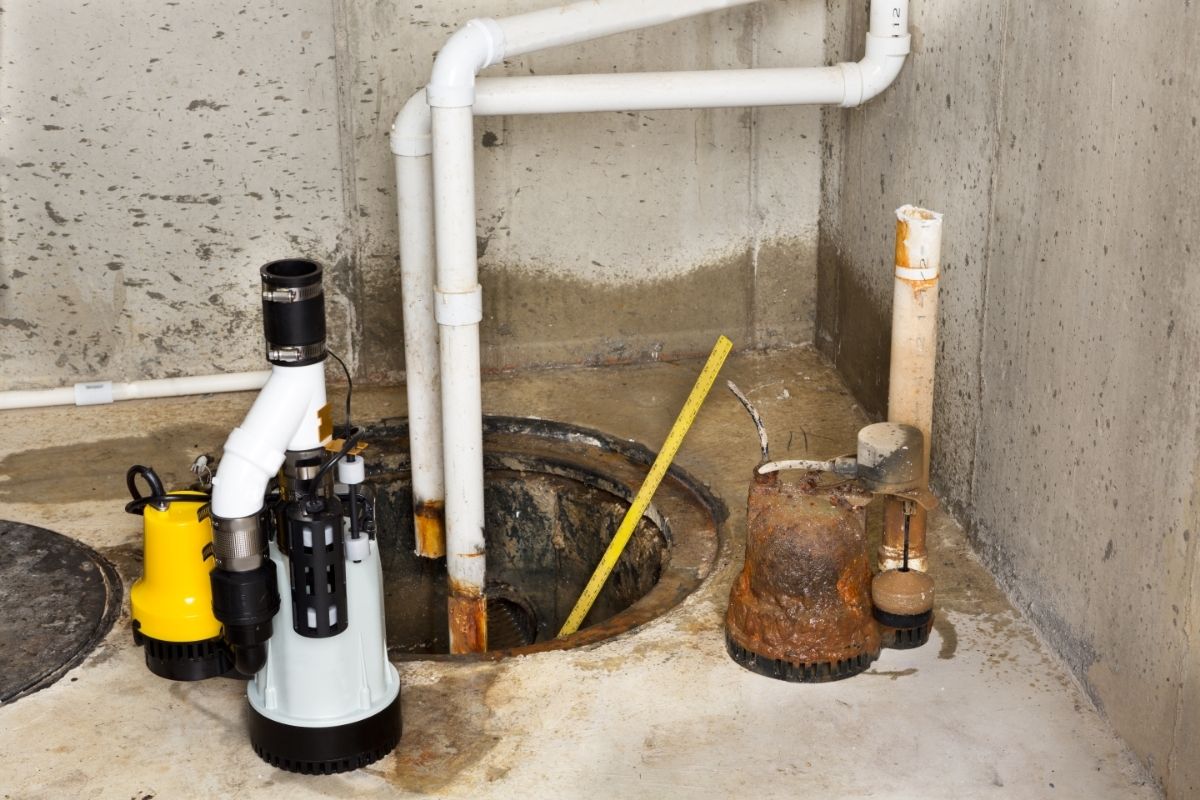
Submersible vs. Pedestal Sump Pump: Which Is Right for Your Home?
In Calgary, spring melt rolls down from the Rockies, summer thunderstorms park over the city for hours at a time, and all that water has to go somewhere.
For many Calgary homeowners considering a sump pump install, the big question is which option in the submersible vs. pedestal sump pump debate makes the most sense for your home, your budget, and how hands-on you want to be with maintenance.
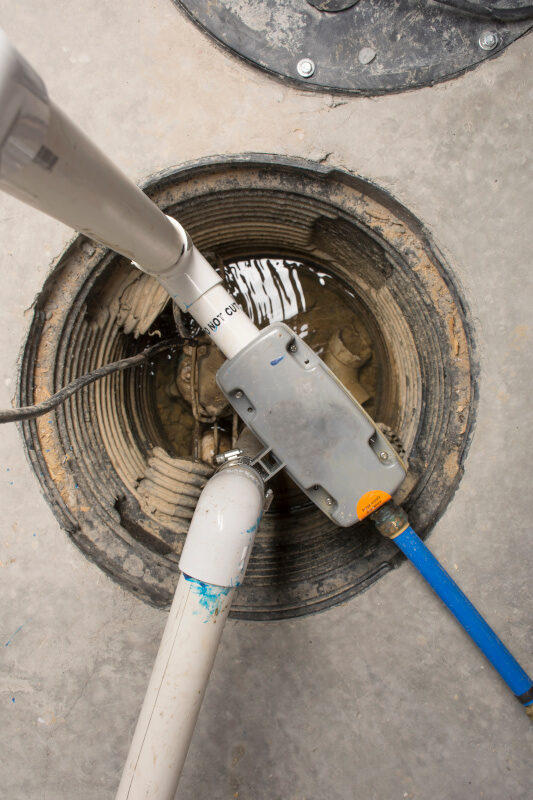
The City of Calgary expects rainstorms lasting less than a day to carry about 28% more volume by the 2050s, and the average cost of repairing a flooded basement is roughly $43,000. Clearly, a sump pump is a worthwhile investment, ensuring all that water doesn’t end up on your basement floor.
Below is a clear comparison and a decision guide for Calgary homeowners.
- Submersible vs. Pedestal Sump Pump: The Quick Answer
- Pros & Cons of Pedestal Sump Pumps
- Pros & Cons of Submersible Sump Pumps
- How to Choose: A Decision Guide for Calgary Homeowners
- Don’t Skip the Backup: Why Every Calgary Sump Pump Needs One
- Sump Pump Maintenance & Lifespan
Submersible vs. Pedestal Sump Pump: The Quick Answer
Pedestal pumps sit on a column above the pit with the motor exposed, so they’re more affordable and easier to service, but louder and less powerful.
Submersible pumps drop into the pit and run underwater, so they’re quieter, stronger and better suited to finished basements. That said, they cost more upfront and have a shorter service life.
| Factor | Pedestal | Submersible |
| Motor location | Above the pit, exposed | Inside the pit, submerged |
| Noise | Louder | Quieter |
| Power | Moderate | Higher & handles debris |
| Lifespan | 25 to 30 years | 7 to 15 years |
| Upfront cost | Lower | Higher |
| Maintenance access | Easy, motor stays dry | Harder, must pull from the pit |
| Best fit | Smaller pits, budget-focused, unfinished basements | Finished basements, higher flood risk, quiet operation |
Pros & Cons of Pedestal Sump Pumps
A pedestal sump pump has a vertical shaft with the motor mounted above the sump pit. When water rises, a float switch activates the pump, moving water out through the discharge line.
Its biggest advantage is accessibility. Because the motor stays dry above the pit, it is easier to inspect, repair, or replace, which can help pedestal pumps last longer than submersible models. They also typically cost less upfront and work well in older homes with narrow or shallow pits.
The trade-off is noise and performance. Exposed motors are louder and more visible, making pedestal pumps less ideal for finished basements. In heavier water conditions, many homeowners prefer submersible models because they sit directly in the pit and are often better suited to higher-volume pumping.
As a result, pedestal pumps are generally best for unfinished basements, smaller pits, moderate water risk, and lower upfront costs.
Although equipment costs are usually lower, final installation pricing depends on the pit, discharge line, check valve, backup system, and any required drainage corrections.
Pros & Cons of Submersible Sump Pumps

A submersible sump pump is sealed inside a watertight housing and placed directly in the sump pit. When water rises, the pump turns on, moving water away from the foundation through the discharge line.
The main benefits are quiet operation, stronger performance in many heavy-water situations, and a cleaner basement setup.
Since the pump sits below floor level and can be covered with a sealed lid, it is much less noticeable than a pedestal pump. That makes it a strong choice for finished basements, basement bedrooms, rec rooms, home offices, and rental suites.
Submersible pumps are also commonly preferred when a home has a history of seepage, a high water table, or a sump pump that runs often during spring melt or summer storms. Many models are also better at handling small debris than pedestal pumps, depending on the pump design.
The drawbacks are cost and service access. Submersible pumps usually cost more upfront, and because they sit in the pit, they have to be pulled out for inspection or replacement. Constant wet conditions can also shorten the motor’s lifespan compared to a pedestal model.
Submersible pumps are usually the better fit if your basement is finished, your pump runs frequently, your home is at higher risk of flooding, or you want the quietest option possible.
How to Choose: A Decision Guide for Calgary Homeowners
The right pump depends on five honest answers.
Home Type & Basement Use
A finished basement with bedrooms, a media room, or rental space favours the quiet, hidden submersible. An unfinished mechanical basement makes a pedestal an easy fit. Sometimes, narrow or older pits only fit a pedestal.
Flood Risk & Location
Homes near the Bow or Elbow, in low-lying areas, or with a history of seepage need more pumping capacity. Check The City of Calgary’s Flood Map before you spec a pump.
Budget
Pedestals win on sticker price. Submersibles win on long-term aesthetics and comfort, especially if you ever finish the basement.
Noise Tolerance
If you can already hear the existing pump from the floor above, you’ll hear it more once the rains pick up. A submersible solves that.
Maintenance Preference
If you like easy access and want a pump that is simpler to inspect, a pedestal pump has an advantage.
If you prefer a quieter, cleaner setup and are comfortable booking professional maintenance when needed, a submersible pump is often the better choice.
A common Calgary recommendation pattern: a submersible primary pump with a battery backup for finished basements or higher-risk locations, and a pedestal for budget-focused homes in lower-risk neighbourhoods.
Don’t Skip the Backup: Why Every Calgary Sump Pump Needs One
Sump pumps need power, and Calgary’s worst floods often coincide with storms that knock out the grid.
The City of Calgary is clear on this point: all sump pumps should have a backup power supply, either a battery backup system or a backup generator.
It also flags homes whose pumps cycle daily or more often as high risk for flooding from pump failure, and recommends a separate backup pump in those cases.
A battery backup is often the most practical option because it keeps the pump running during an outage without relying on the home’s water supply.
If your basement is finished, a backup system is one of the smartest upgrades you can make and pays for itself the first time the power goes out during a flood.
Sump Pump Maintenance & Lifespan
Sump pumps do not need much attention, but they should not be ignored. A pump can fail quietly, and many homeowners do not realize there is a problem until the next heavy rain.
Every few months:
- Pour a bucket of water into the pit to confirm the float rises and the pump turns on.
- Clear out gravel, dirt, and debris from the pit.
- Check that the float switch moves freely.
- Inspect the check valve.
- Check the discharge line outside to make sure it isn’t crushed, frozen, or aimed back at the foundation.
- Listen for grinding, humming, or short-cycling during a test run.
The City of Calgary recommends replacing your sump pump every 10 years, or sooner if it cycles constantly.
If yours runs daily, book a sump pump maintenance check and a conversation to discuss whether the system is properly sized. For a deeper walkthrough of how the whole setup works, our guide to sump pumps covers the basics.
Get the Right Sump Pump Installed in Calgary & Airdrie

Both pump types do the job, but the right choice depends on your basement, your flood risk, and how hands-on you want to be.
Choose a pedestal if your basement is unfinished, your water risk is moderate, and you want a lower upfront cost with easier maintenance access. Choose a submersible if your basement is finished, the pump runs often, or you want quieter operation in a higher-risk home.
Either way, proper sizing, a working check valve, a clear discharge line, a sealed lid, and backup power are what turn a sump pump into actual peace of mind.
As a family-owned Calgary plumbing company since 1983, Son-Rise Plumbing & Gasfitting serves homeowners across Calgary, Airdrie, Cochrane, and other surrounding communities.
We’ll properly size the sump pump, explain your options in plain language, and provide upfront pricing before any work begins. Contact our team to book your sump pump installation today.